Some roofs can take a new cap sheet over sound layers, while others need to be stripped to the deck. A roofer checks what lies beneath before choosing. Call the number on this page to be connected with a local roofing contractor in Suquamish.
How to recognize one from the ground
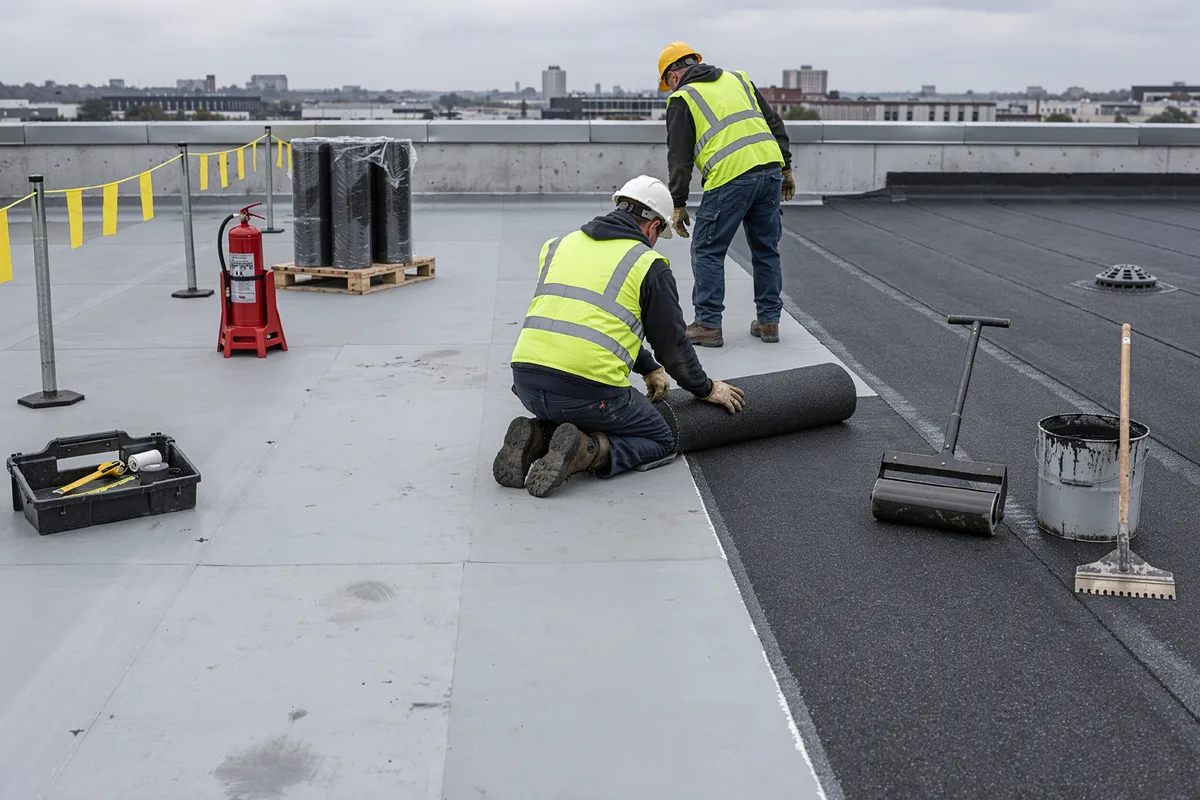
Look for a dark gray or black rolled surface, often with a sprinkle of mineral granules in white, gray or tan. You may see overlapping strips with rounded, bleeding edges. Binoculars help, and the roofer can confirm what is actually on top. Photos help.
Why torch work needs trained roofers
The torch produces an open flame at the roof surface, often within inches of wood decking, trim and insulation. A small spark in a hidden gap can smolder for hours. That risk is why this work is not for owners to attempt or improvise.
Shade under large trees keeps a torch-down roof damp, which encourages moss on the granules and slows drying after rain.
Waterfront roofs face gusts that can lift edges before they are fully set, so work here is often timed to calmer conditions.
Blisters, ridges and splits
- Blisters point to trapped moisture or air
- Ridges often follow joints in the deck
- Splits suggest movement or old age
- Bare spots show where granules have worn off
Each one calls for a slightly different fix. A roofer will match the repair to the kind of failure.
Useful local facts for Suquamish
Reroof permits for Suquamish addresses go through the Kitsap DCD. Its published rule: roofing permit required for residential if it includes structural work or more than 2,100 square feet of roofing materials are being replaced; always required for commercial.
Washington requires roofing contractors to register with the Department of Labor & Industries. L&I's Verify a Contractor tool shows a company's registration status before you sign anything.
Homes near the water around Suquamish take more wind and salt exposure, which wears metal flashing and fasteners faster.
Fall and winter windstorms are the main source of sudden roof damage around Puget Sound. Lifted tabs and loose ridge caps are worth a look after a blow.
With big firs and cedars close to many homes in Suquamish, falling limbs during windstorms are a real roof risk. Trimming overhanging branches helps.
Nearby, the same kind of help is available in Silverdale, Poulsbo and Indianola.
Access, staging and neighbors
Roof height, narrow lots, tight alleys and nearby buildings influence the cost. The roofer may need to stage materials or reserve street space. Mention any access limits so that the estimate reflects them from the start. Photos from the street help roofers plan, plus a note on gates.
What a visit usually covers
The roofer examines the surface, laps, flashings, drains and edges, and may probe suspect spots. Expect questions about leak history and past repairs. A clear written scope and photos of the problem areas should follow. Ask to see any warranty in writing and read what it covers and excludes.
Torch-Down Roofing questions in Suquamish
Can a torch-down roof be repaired instead of replaced?
Can torch-down be installed in rain?
Can I put a coating over a torch-down roof?
What should I do if I smell smoke during roofing work?
More roofing services in Suquamish
Torch-Down Roofing nearby
Helpful guides
Sources
Last updated: