Torch-down roofing is modified bitumen sheet that a roofer bonds to the roof by heating the underside with a propane torch. It is built in layers, with a cap sheet on top. Call the number on this page to be connected with a local roofing contractor in Kingston.
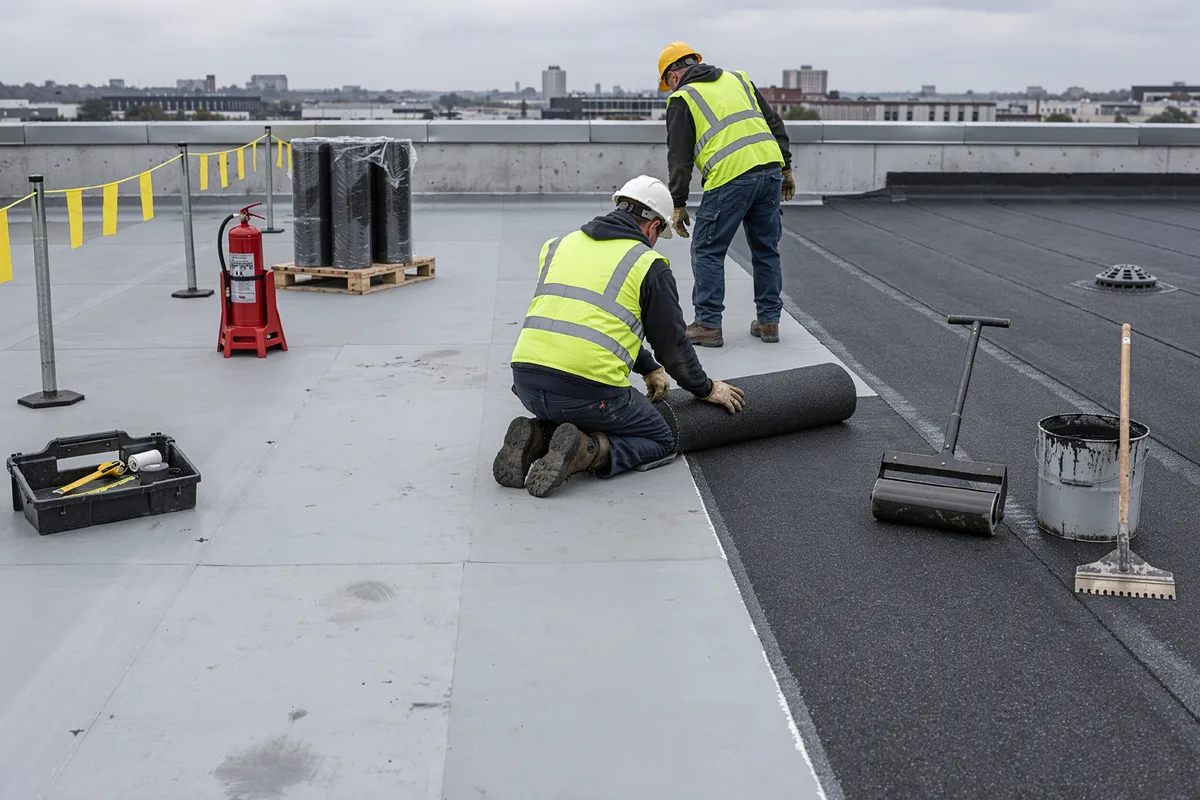
What torch-down roofing actually is
Torch-down is a roll roofing made of asphalt modified with plastic or rubber and reinforced with fabric. A roofer unrolls the sheet and heats its underside so it fuses to the layer below. The result is a continuous, waterproof surface with few joints. It handles long wet seasons well.
Fire-safety steps roofers take
- Fire extinguishers kept on the roof
- Clearing leaves and debris from the work area
- Shielding vents, walls and gaps near the flame
- Checking that gas hoses and cylinders are secure
Careful roofers treat these as routine. Never try work near a gas line or a vent.
Tall firs and cedars drop needles and limbs onto low roofs here, so cap sheets get scuffed and drains clog more often.
Wind off the water and salt air work on edge metal and flashings, so roofers watch the perimeter closely on shoreline torch-down roofs.
Low spots and standing water
Modified bitumen tolerates some ponding, but constant puddles speed wear and loosen seams. A low area from settled framing or a poorly placed drain is a common cause. The roofer should look at drainage as well as the damage. Fixing the slope can matter as much as patching.
Weighing repair against replacement
A spot repair costs less today but may only delay a larger bill. If the roof is old and failing in many places, replacement is often the better use of money. A roofer can walk through both options candidly. Ask for both prices side by side.
What to ask the roofer
- How do you protect the building from the torch?
- Will you strip or recover the old roof?
- What happens at walls, drains and edges?
- What manufacturer warranties apply to the material?
Get answers before work starts. Get answers before work starts and keep notes of what each roofer says.
Know this about Kingston roofs
Reroof permits for Kingston addresses go through the Kitsap DCD. Its published rule: roofing permit required for residential if it includes structural work or more than 2,100 square feet of roofing materials are being replaced; always required for commercial.
Washington L&I registers construction contractors. Its free lookup shows whether a roofer's registration is active and whether there are claims against it.
Homes near the water around Kingston take more wind and salt exposure, which wears metal flashing and fasteners faster.
Fall and winter windstorms are the main source of sudden roof damage around Puget Sound. Lifted tabs and loose ridge caps are worth a look after a blow.
With big firs and cedars close to many homes in Kingston, falling limbs during windstorms are a real roof risk. Trimming overhanging branches helps.
Electric service here comes from PSE (outages: 888-225-5773). Keep away from any line touching the house or a fallen tree.
Contractors that take calls here usually also work in Edmonds, Indianola and Suquamish.
Torch-Down Roofing questions in Kingston
Is torch-down roofing safe?
Can I install or repair torch-down roofing myself?
What does a failing torch-down roof look like?
Why do roofers sometimes avoid open-flame work?
More roofing services in Kingston
Torch-Down Roofing nearby
Helpful guides
Sources
Last updated: