New installs are usually priced from the plans or a site visit, using roof area, pitch, complexity and the material you pick. Builders often have a preferred roofer, but owners can choose their own. Call the number on this page to be connected with a local roofing contractor in Kingston.
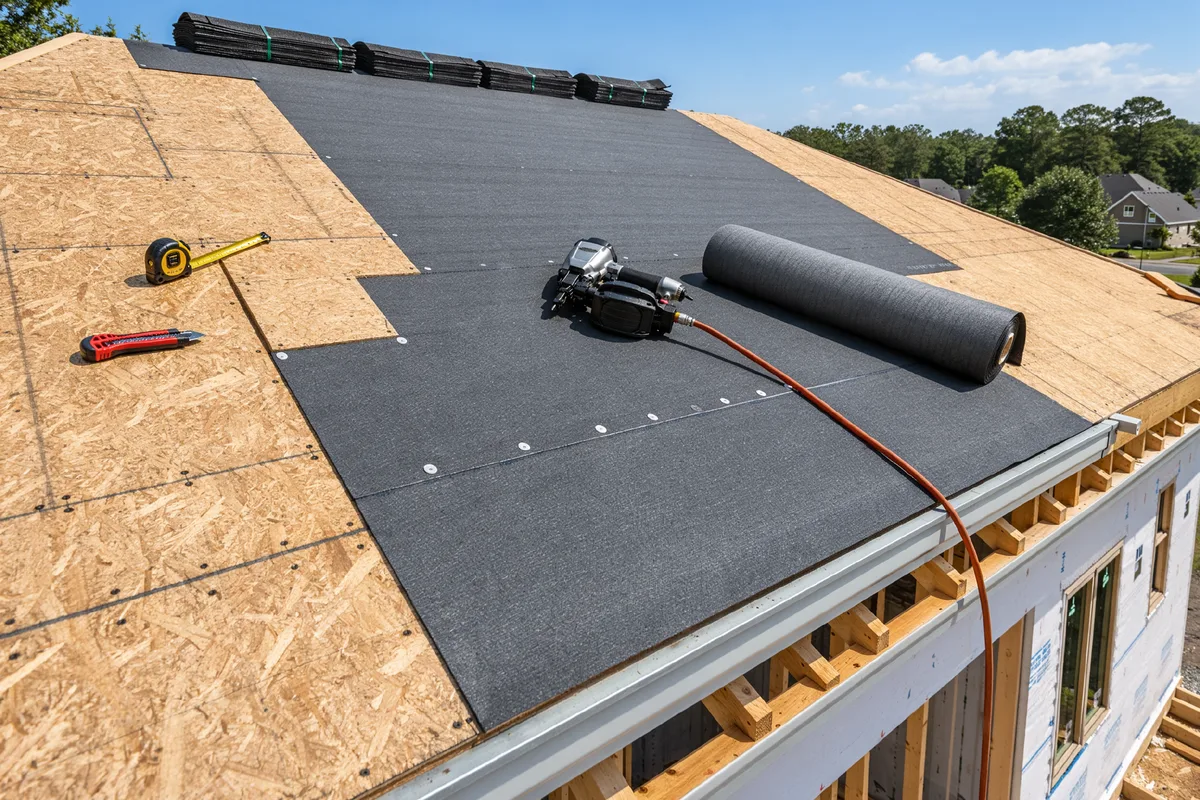
Where an addition meets the old roof
The joint between a new section and the existing house is where leaks start. Expect step flashing along walls, careful matching of ridge heights and shingle courses, and sealed transitions. Ask how the roofer will weave the new work into whatever material already covers the house.
Where roofing fits in the build
- Framing and trusses go up.
- Sheathing is nailed and inspected.
- The roofer installs underlayment and flashing.
- Finish roofing follows, then gutters and trim.
Delays at any step push the others back. Confirm each step against your project schedule.
Wooded lots shed debris onto new roofs from day one, so plan gutter guards or regular cleaning and keep trees trimmed away from the eaves.
Shoreline sites often face harsh wind, so the roofer may recommend a higher-nailing pattern and sturdy ridge details for new construction.
Site access and storage
Muddy construction sites, narrow lots, limited laydown space and hillside lots complicate material delivery. Crane or boom truck drops may be needed for heavy products. Tell the roofer about access early so the price reflects how materials actually reach the roof. Remote lots add travel and haul time.
Questions for the roofer
- Which plans and details are you pricing from?
- Which underlayment goes under this material?
- Who flashes the chimney and skylights?
- When can you dry in?
Written answers prevent surprises. Ask each roofer the same list so you can compare answers.
After installation
Walk the roof lines from the ground with the roofer, review flashing and penetrations, and collect warranty documents, permit sign-off and material receipts. Save them for the home file. A buyer, lender or insurer may eventually ask for proof of the new roof. Keep the digital copies backed up as well as the paper set.
Local details for Kingston
Reroof permits for Kingston addresses go through the Kitsap DCD. Its published rule: roofing permit required for residential if it includes structural work or more than 2,100 square feet of roofing materials are being replaced; always required for commercial.
Before work begins, look the company up on L&I's Verify a Contractor page. Washington requires construction contractors, roofers included, to be registered.
Homes near the water around Kingston take more wind and salt exposure, which wears metal flashing and fasteners faster.
Most roof trouble in this part of Washington shows up in the wet season, when a small gap in flashing or a lifted shingle has months of rain to work on.
With big firs and cedars close to many homes in Kingston, falling limbs during windstorms are a real roof risk. Trimming overhanging branches helps.
Nearby, the same kind of help is available in Edmonds, Indianola and Suquamish.
New Roof Installation questions in Kingston
When should I hire a roofer for new construction?
Who handles gutters on a new roof?
Does new construction come with a roof warranty?
How do I protect a new build from rain before the roof is done?
More roofing services in Kingston
New Roof Installation nearby
Helpful guides
Sources
Last updated: