Torch-down roofing is modified bitumen sheet that a roofer bonds to the roof by heating the underside with a propane torch. It is built in layers, with a cap sheet on top. Call the number on this page to be connected with a local roofing contractor in Bainbridge Island.
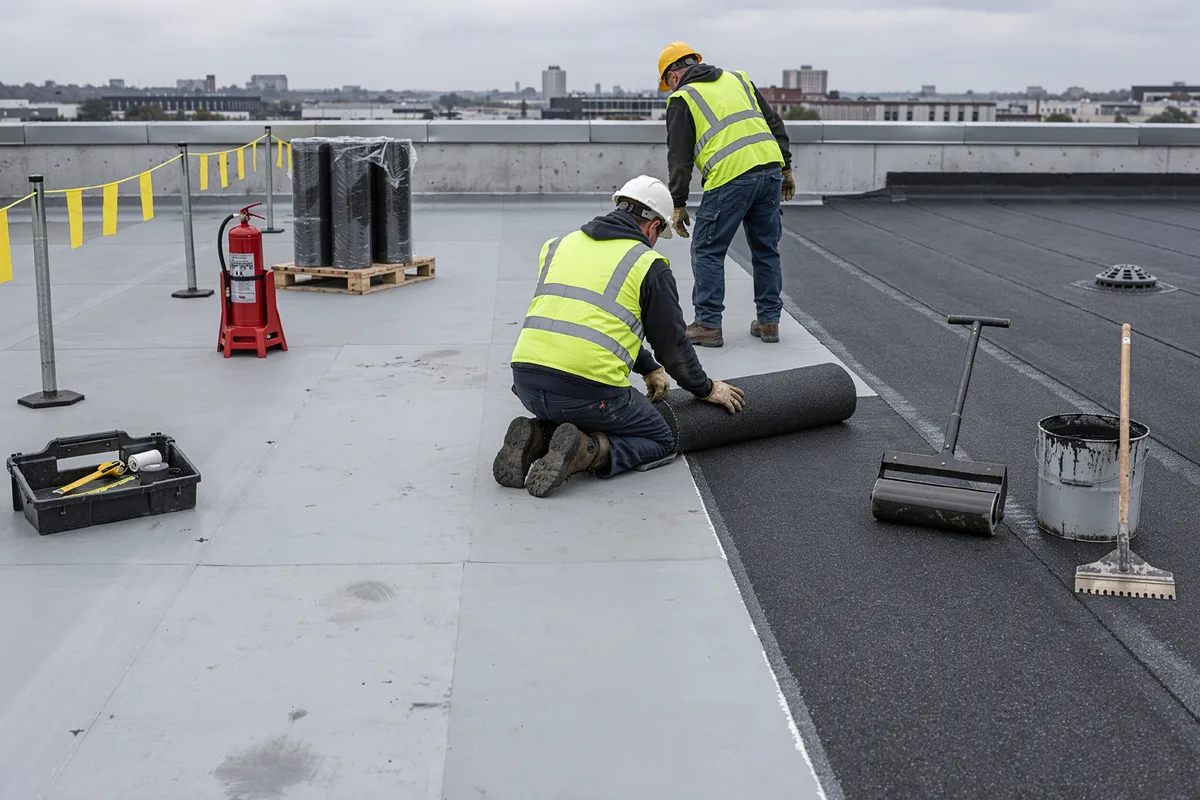
What torch-down roofing actually is
Torch-down is a roll roofing made of asphalt modified with plastic or rubber and reinforced with fabric. A roofer unrolls the sheet and heats its underside so it fuses to the layer below. The result is a continuous, waterproof surface with few joints. It handles long wet seasons well.
Where a torch should not go
Open flame is a poor fit for roofs over combustible gaps, old dry framing or tight cavities. In those cases, a roofer may choose a cold-applied, self-adhered or heat-welded product instead. Ask why a method was chosen for your building. Ask what the roofer plans to use.
Shade under large trees keeps a torch-down roof damp, which encourages moss on the granules and slows drying after rain.
Waterfront roofs face gusts that can lift edges before they are fully set, so work here is often timed to calmer conditions.
Sun, shade and granule wear
Granules protect the asphalt from sunlight and water flow carries them away over time. Shaded sections stay damp and grow moss, while sunny sections dry and harden. When bare asphalt shows through, the roof is aging fast. Photos of bare patches are useful when you call.
Do not skip the deck
A new surface on a soft or wet deck will not last. Repairing rotted sheathing adds cost, but skipping it wastes the new roof. A roofer can price the deck as a separate line so you can see the numbers. Ask for the deck repair price in writing.
Keeping the roof in good shape afterward
Clear debris from drains and scuppers, keep limbs trimmed back and avoid walking on the surface. A roofer can recommend periodic checks, especially after strong storms, so small laps are resealed before they leak. Small habits make a long-term difference, and a roofer can suggest a check schedule.
Permits, weather and roofs in Bainbridge Island
Building permits for Bainbridge Island homes are handled by the City of Bainbridge Island permit office. Small repairs often need nothing, while a tear-off, new sheathing or structural work usually does, so ask the roofer who pulls the permit.
A quick check that pays off: enter the contractor's name in L&I's online verify tool to confirm an active Washington registration.
On the island, wind off the water and salt spray are hard on fasteners and flashing. Ask whether the company already works on Bainbridge Island homes.
Most roof trouble in this part of Washington shows up in the wet season, when a small gap in flashing or a lifted shingle has months of rain to work on.
Tall evergreens around Bainbridge Island drop needles that fill valleys and gutters and keep roofs shaded and damp, which is where moss starts.
Nearby, the same kind of help is available in Suquamish, Indianola and Silverdale.
Torch-Down Roofing questions in Bainbridge Island
What is torch-down roofing?
How long does a torch-down roof last?
Is torch-down better than TPO?
Why do roofers sometimes avoid open-flame work?
More roofing services in Bainbridge Island
Torch-Down Roofing nearby
Helpful guides
Sources
Last updated: