Small limbs usually scrape and dent shingles, while heavy ones break through the roof. The roofer checks both the surface and what is underneath before deciding on repair. Call the number on this page to be connected with a local roofing contractor in Bainbridge Island.
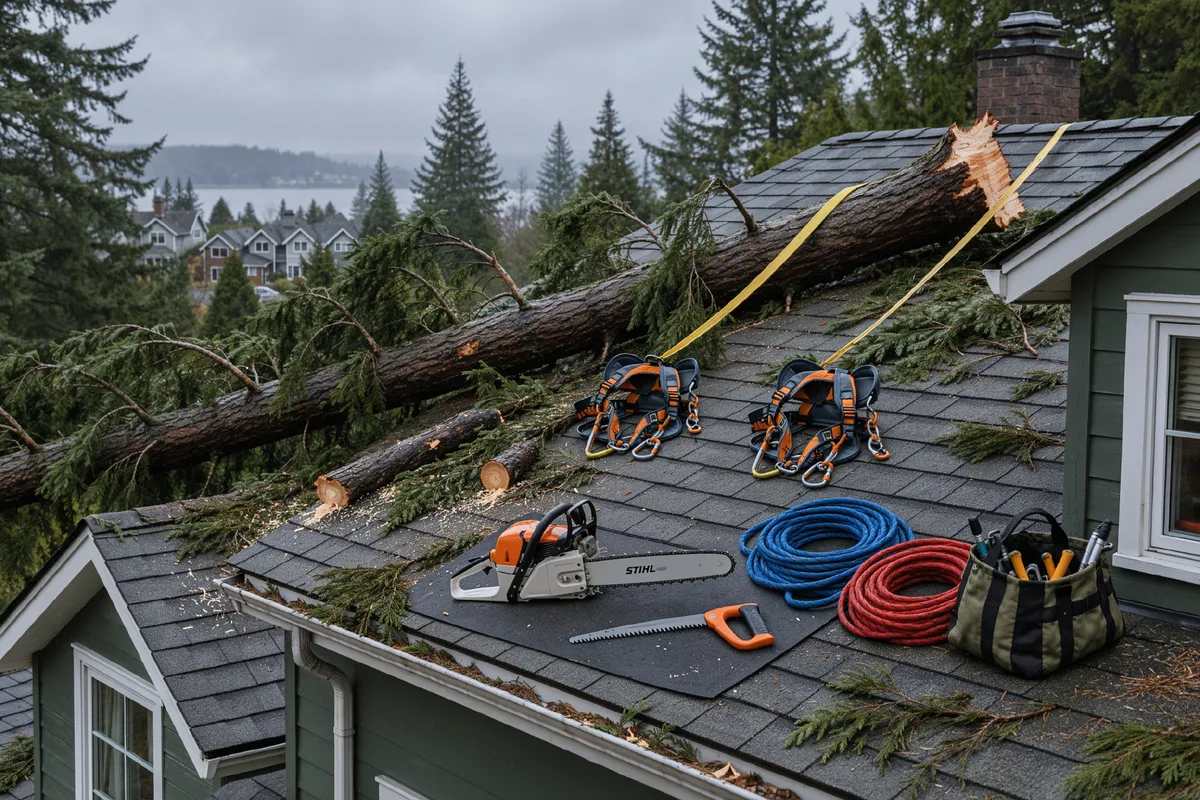
Is the house still safe to stay in?
Leave if the ceiling bows, walls are cracked, doors stick suddenly, or you hear creaking. A heavy tree can shift loads on framing in ways you cannot see from inside. A building inspector or structural engineer can decide when it is safe to return.
Two jobs, two kinds of crew
A tree service cuts and hauls the tree, and a roofer repairs the roof. They work best in sequence, with the roofer often placing temporary cover first and the tree crew removing weight carefully after. Tell each about the other so the work is coordinated.
Getting both a tree crew and a roofer to an island home can take planning around ferries and weather, so temporary cover may be especially important.
Exposed shoreline lots see harder winds, which can bring down trees onto roofs, so ask the roofer to check the rest of the roof for stress from the same gusts.
Structural damage to look for
The weight of a tree can crack rafters, split ridge boards, crush decking and push walls. Inside, look for sagging ceilings, new cracks, doors that stick and gaps at corners. A roofer checks the surface and framing, and may recommend a structural engineer for serious cases.
Scrapes, gouges and wear
Branches that rub the roof in wind wear down granules and shorten shingle life, even without a storm strike. Gouges expose the mat underneath. A roofer can tell fresh impact from long-term rubbing, which matters when a claim depends on the cause. Ask the roofer to look at both.
Trees worth a second look
- Leaning toward the house
- Dead or brittle upper branches
- Cracks, fungus or lifted roots
- Past storm damage or topped limbs
A tree service or arborist can assess them. Acting before a storm is far easier than cleaning up after one, and it protects the roof and the people inside.
Before you call in Bainbridge Island
For permit questions on a reroof, start with the City of Bainbridge Island permit office. A contractor who works here regularly will know whether your job needs anything filed.
Washington requires roofing contractors to register with the Department of Labor & Industries. L&I's Verify a Contractor tool shows a company's registration status before you sign anything.
On the island, wind off the water and salt spray are hard on fasteners and flashing. Ask whether the company already works on Bainbridge Island homes.
Most roof trouble in this part of Washington shows up in the wet season, when a small gap in flashing or a lifted shingle has months of rain to work on.
Tall evergreens around Bainbridge Island drop needles that fill valleys and gutters and keep roofs shaded and damp, which is where moss starts.
Nearby, the same kind of help is available in Suquamish, Indianola and Silverdale.
Tree Damage Roof Repair questions in Bainbridge Island
What damage can a tree do beyond the shingles?
Can small branch damage cause leaks?
How do I prevent tree damage in the future?
What should I photograph?
More roofing services in Bainbridge Island
Tree Damage Roof Repair nearby
Helpful guides
Sources
Last updated: