Document the damage with photos before anything is moved, then protect the opening with temporary cover while removal and repairs are arranged. Call the number on this page to be connected with a local roofing contractor in Indianola.
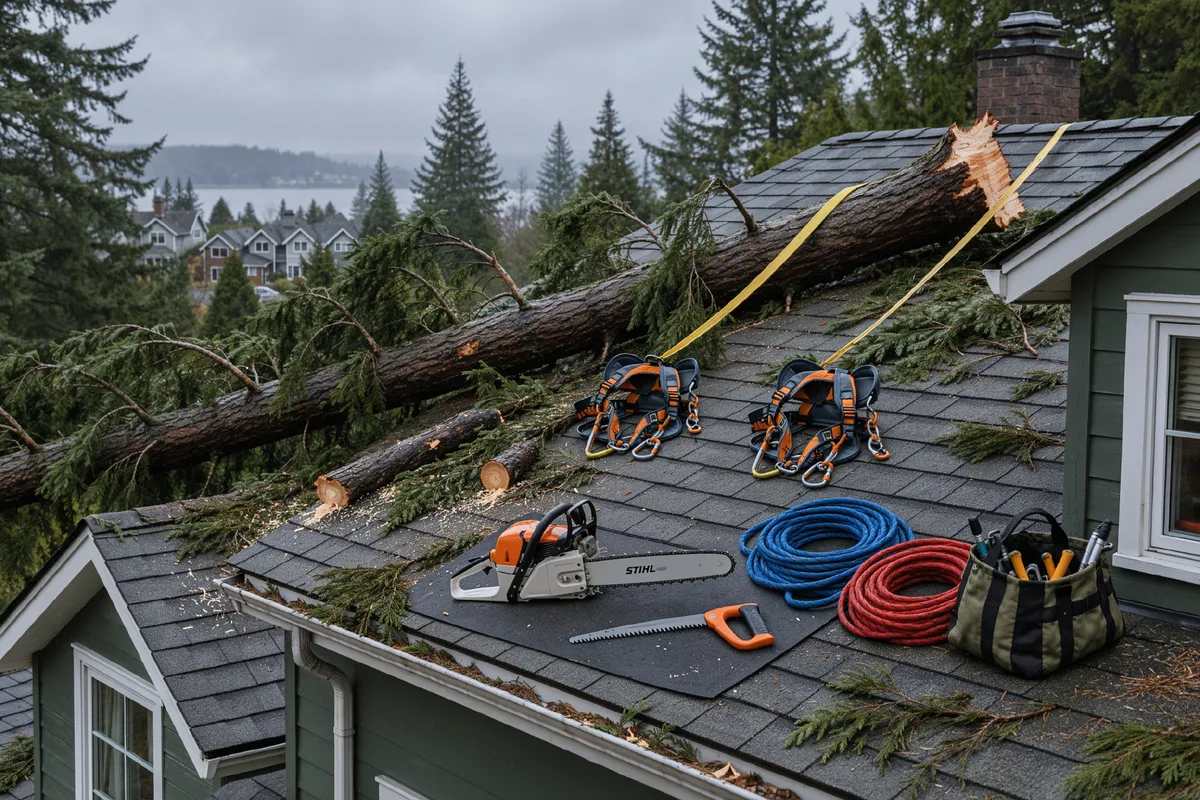
Leaning trees and hanging limbs
A tree leaning toward the house, or a broken limb hung up in the canopy, can fall without warning, especially in more wind. Keep people away from the area and tell the tree service about it. Roof work should not start under an unstable tree.
Typical sequence
- Make the area safe and lines clear
- Cover the opening temporarily
- Remove the tree in controlled pieces
- Inspect the roof and framing
- Repair permanently
Order matters. Skipping steps, such as removing the tree before the opening is protected, can let rain pour in and push loads onto damaged framing.
Properties outside city limits often have long private drives and mature trees, so tell crews about gates, gravel and soft ground before they arrive.
Homes near the water in Indianola often have mature trees exposed to strong gusts, so trimming before storm season is worth discussing with a tree service.
When damage needs a permit
Structural repairs, framing replacement and major reroofing can require a permit and inspection. The roofer or the local building office can say what applies. Ask early, so approvals are lined up before the temporary cover has to come off. Missing approvals can stall the whole schedule.
Flat roofs and tree strikes
Low-slope roofs can be punctured by even small limbs, and the membrane can tear where debris sat in a puddle. The roofer checks seams, drains and the surface beyond the visible tear, since water can travel under a membrane before showing inside. Looking costs less than rebuilding.
Permits, weather and roofs in Indianola
On permits, the Kitsap DCD says: roofing permit required for residential if it includes structural work or more than 2,100 square feet of roofing materials are being replaced; always required for commercial.
Before work begins, look the company up on L&I's Verify a Contractor page. Washington requires construction contractors, roofers included, to be registered.
Homes near the water around Indianola take more wind and salt exposure, which wears metal flashing and fasteners faster.
Most roof trouble in this part of Washington shows up in the wet season, when a small gap in flashing or a lifted shingle has months of rain to work on.
Tall evergreens around Indianola drop needles that fill valleys and gutters and keep roofs shaded and damp, which is where moss starts.
Storm took out power too? Report it to PSE at 888-225-5773, and stay clear of any downed line.
Contractors that take calls here usually also work in Bainbridge Island, Kingston and Suquamish.
Cedar and fir near the roof
Tall conifers shed needles, cones and limbs, and shade the roof so moss and moisture build. Keeping them trimmed back improves airflow and drying, and reduces both impact risk and debris in valleys and gutters. It also helps shingles last longer. Shade also keeps roofs damp longer.
Tree Damage Roof Repair questions in Indianola
A tree fell on my roof. What do I do first?
Is it safe to stay in the house after a tree hit?
Will the roofer cover the hole before the tree is removed?
Will the repair need a permit?
More roofing services in Indianola
Tree Damage Roof Repair nearby
Helpful guides
Sources
Last updated: