TPO is a single-ply membrane made from thermoplastic polyolefin, usually white, with seams that a roofer welds together with hot air. It is rolled across the roof in wide sheets. Call the number on this page to be connected with a local roofing contractor in Suquamish.
Types of TPO in the field
Membranes come in different thicknesses, reinforced with fabric or polyester scrim. Thicker sheets resist punctures and foot traffic better. A roofer can explain which version suits a roof that sees heavy use or lots of falling debris. Ask which thickness the roofer recommends and why it suits your building.
Why the welds make or break a TPO roof
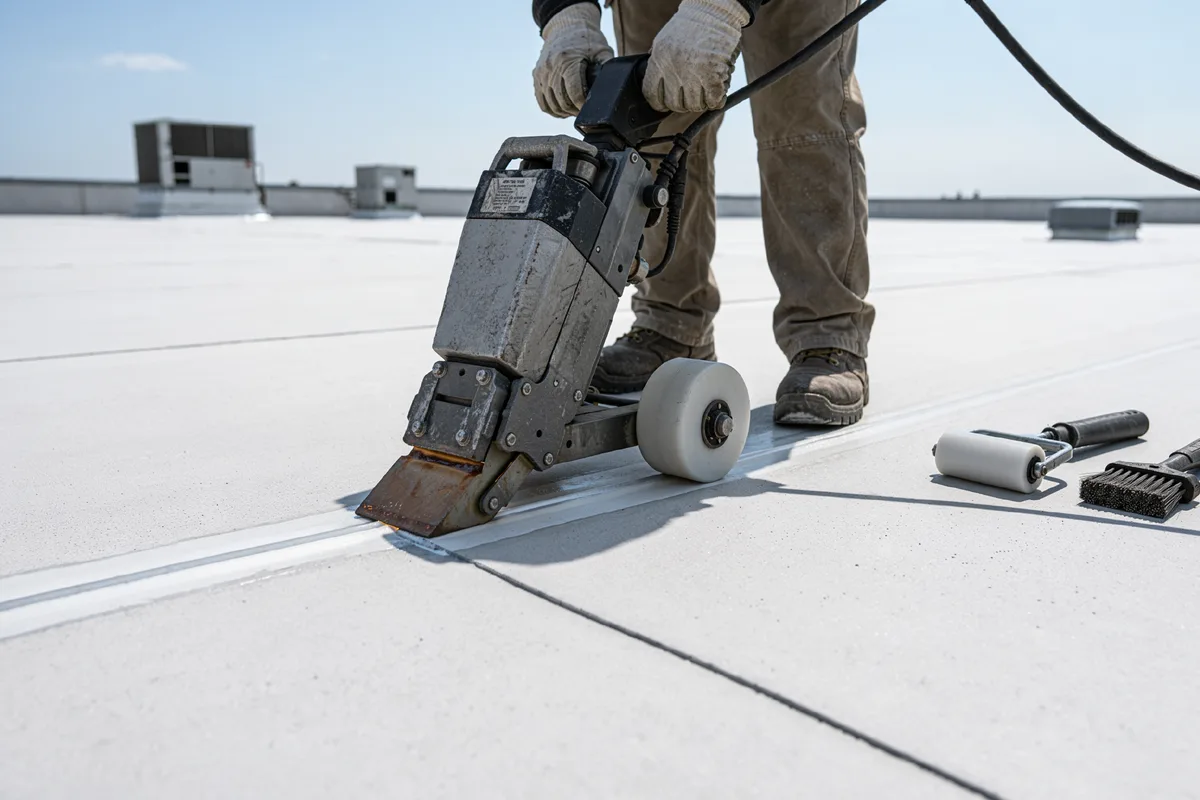
A TPO seam is welded with a hot-air gun and a pressure roller. Done right, the welded overlap is as strong as the sheet. Done badly, it leaves channels. The roofer's seam work is the most important part of the job.
Wind off the water pulls hard at the edges of a single-ply roof, so shoreline buildings often need extra fasteners and strong edge metal.
Needles, leaves and limbs from tall trees pile onto flat roofs here, so a white TPO surface shows debris and needs drain checks.
What shapes the price of a TPO roof
Roof area, membrane thickness, insulation, attachment method, number of penetrations and access all affect cost. A plain rectangle costs less than a roof with many curbs and walls. Each independent roofer prices his own work after a visit. Ask the roofer to explain what drives your quote.
Know this about Suquamish roofs
Permit note from the Kitsap DCD: Roofing permit required for residential if it includes structural work or more than 2,100 square feet of roofing materials are being replaced; always required for commercial.
Washington requires roofing contractors to register with the Department of Labor & Industries. L&I's Verify a Contractor tool shows a company's registration status before you sign anything.
Homes near the water around Suquamish take more wind and salt exposure, which wears metal flashing and fasteners faster.
Fall and winter windstorms are the main source of sudden roof damage around Puget Sound. Lifted tabs and loose ridge caps are worth a look after a blow.
Tall evergreens around Suquamish drop needles that fill valleys and gutters and keep roofs shaded and damp, which is where moss starts.
Storm took out power too? Report it to PSE at 888-225-5773, and stay clear of any downed line.
Contractors that take calls here usually also work in Silverdale, Poulsbo and Indianola.
Drainage and ponding on TPO
Thermoplastic membranes tolerate water better than some, but standing puddles still collect dirt, algae and strain. A good plan moves water to drains. If puddles remain after a dry spell, the roofer should explain why. A roofer can often improve drainage with small changes, such as tapered pieces.
Questions about manufacturer warranties
Warranties on membranes vary in length and coverage, and some require approved installers or products. Ask what the warranty covers, what voids it and who files a claim. Keep the paperwork with your building records. Ask the roofer to explain any workmanship coverage separately from the manufacturer's coverage.
TPO Roofing questions in Suquamish
Does TPO work on a roof with standing water?
How does a TPO roof handle foot traffic?
Does TPO need a permit?
How do I check a roofer is registered in Washington?
More roofing services in Suquamish
TPO Roofing nearby
Helpful guides
Sources
Last updated: