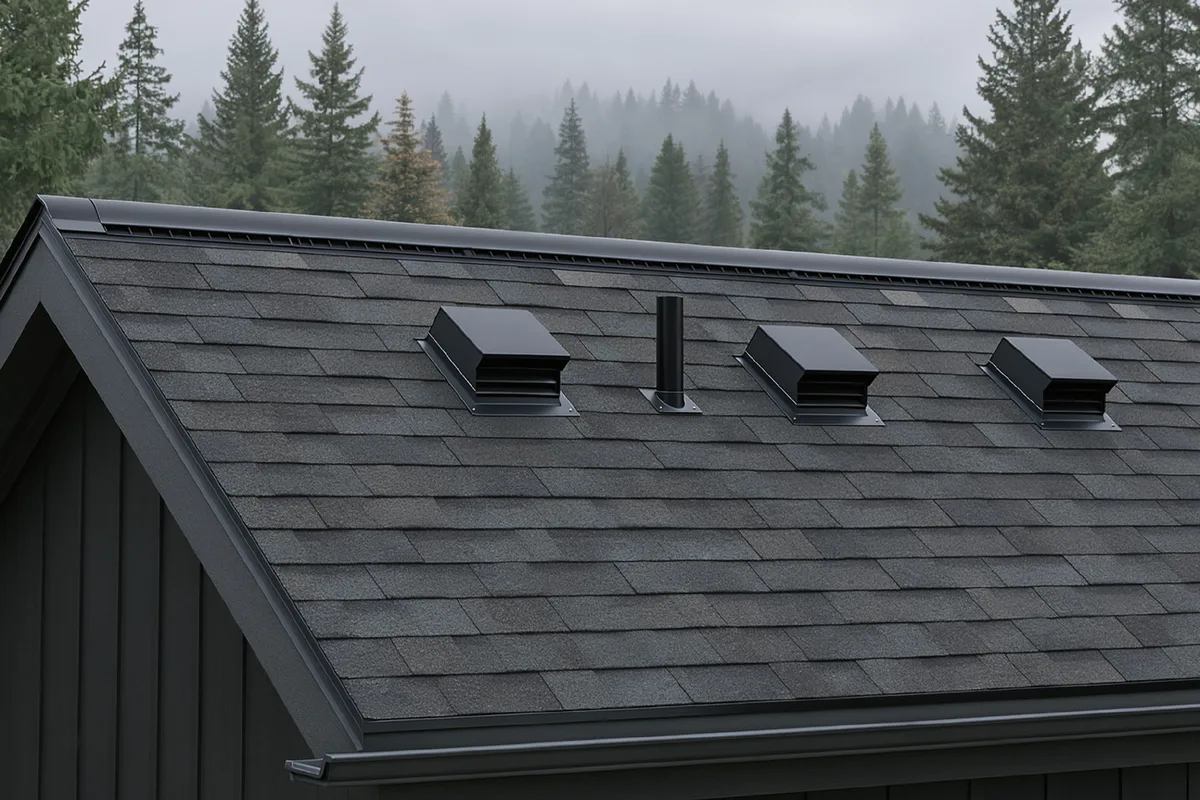
Roof ventilation moves air through the attic so moisture escapes instead of condensing on the underside of the sheathing. In wet Seattle winters, poor airflow can lead to damp insulation, stained rafters and shorter shingle life. Call the number on this page to be connected with a local roofing contractor in Seattle.
Why attic airflow matters here
Seattle's air is cool and humid for much of the year. NWS describes a rainy season from October through March with December typically the wettest month. Warm, moist air from cooking, showers and breathing rises into the attic, and when it meets cold roof sheathing it condenses. Without a way out, that water soaks insulation and can feed mold on wood framing.
How a ventilation system works
Most systems rely on balance. Intake vents at the soffits or eaves let outside air in low, and exhaust vents at or near the ridge let it out high. Ridge vents, box vents, gable vents and powered fans are the usual pieces. Mixing types can short-circuit the airflow, so a roofer will often look at the whole system rather than add a vent in isolation. Blocked soffit vents, often covered by insulation, are a frequent cause of trouble.
Signs a roof may be under-ventilated
- Frost, dampness or dark staining on the underside of the roof deck
- Insulation that feels damp or matted
- A musty smell in the attic or upstairs closets
- Rusty nail tips poking through the sheathing
- Shingles that look unusually worn compared with the rest of the house
Check from the attic hatch with a flashlight and do not step off the framing. Do not go on the roof to look at vents, especially when it is wet or mossy.
Where ventilation meets reroofing
The best time to upgrade vents is during a replacement, when old decking and soffit areas are already exposed. Seattle's code treats a reroof as removing existing coverings down to the deck, and SDCI notes that insulation must be added to meet energy standards when roof cavities are exposed or uninsulated, which affects how much airflow space remains. Ask the roofer how baffles and insulation depth will be handled so vents are not blocked. For homes with dormers, vaulted ceilings or low-slope sections, ventilation can be harder and may need a different layout.
What it can cost
HomeGuide lists roof vent installation at about $200 to $700 per job in national figures. That is not a Seattle quote, and it covers vents only. Adding soffit intake, repairing rotted decking or rebuilding an attic's insulation costs more.
Hiring and next steps
Washington roofers must be registered with L&I, so check the company on Verify a Contractor. Ask for a written scope that lists vent types, locations, and how intake and exhaust airflow will be balanced. The guide linked below explains attic condensation in more detail. You may also want fascia and soffit repair if intake areas are damaged, or a roof inspection first.
Roof Ventilation questions from Seattle homeowners
Do I need more vents if my attic is damp?
Can poor ventilation damage shingles?
Should bathroom fans vent into the attic?
Is a ridge vent better than box vents?
Related roofing services in Seattle
Helpful guides
Roof Ventilation in nearby cities and towns
King County
Snohomish County
Pierce County
Kitsap County
Island County
Mason County
Jefferson County
Sources
Last updated: