Signs of poor ventilation include frost or droplets on roof nails, dark staining on the decking, damp insulation and musty air. Insulation blocking the soffits is a frequent cause. A roofer can inspect the attic and the exterior vents and explain what is needed. Call the number on this page to be connected with a local roofing contractor in Shoreline.
When the problem shows up in winter
Condensation is worst when it is cold outside and warm inside. Wet, chilly months make attics collect moisture for weeks, so signs often appear in January or February. Musty odor in closets below the roof is another common clue. Smell is often the first warning sign.
Skylights, chimneys and other obstacles
Chimneys, skylight shafts and framing can dead-end airflow in a section of attic. Even when most of the roof breathes well, one cut-off bay can stay wet and rot. Roofers look for these pockets when tracing air paths. Those hidden pockets can stay damp all winter without anyone noticing.
Homes built in the 1960s here may have blocked or painted-over soffit vents and old fans venting into the attic, which a roofer can trace during an inspection.
Why quick fixes can backfire
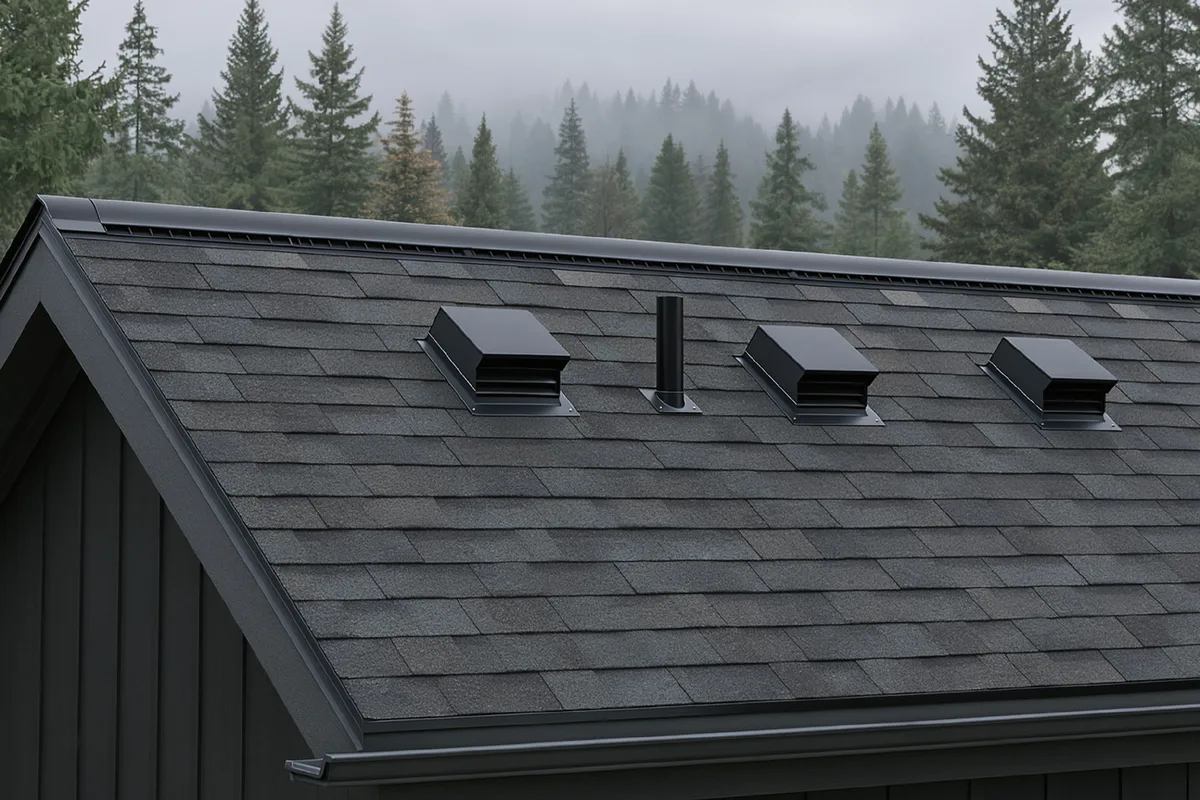
Adding a vent without understanding airflow can make things worse. Unbalanced exhaust may pull moist indoor air into the attic. Ask the roofer to explain intake and exhaust in plain language, and compare quotes that cover the same scope. Written scopes make quotes easier to compare.
When mold is present
Visible mold on decking or insulation may need remediation separate from the roofing job. A roofer can fix the airflow problem that caused it, but cleaning or removal is often handled by another specialist. Ask how that handoff will work. Keep records of what was found.
Mold and health cautions
Dark growth on attic wood can irritate lungs and skin. Avoid disturbing it, and keep the attic hatch closed if you smell mustiness. Mention any health concerns when you call so the roofer can advise on safe next steps. Do not use bleach or sprays up there.
Know this about Shoreline roofs
If the job grows from a patch into a full reroof or framing repair, check with the City of Shoreline permit office before work starts.
Before work begins, look the company up on L&I's Verify a Contractor page. Washington requires construction contractors, roofers included, to be registered.
Fall and winter windstorms are the main source of sudden roof damage around Puget Sound. Lifted tabs and loose ridge caps are worth a look after a blow.
Storm took out power too? Report it to Seattle City Light at 206-684-3000, and stay clear of any downed line.
Much of the housing in Shoreline dates to the 1960s or earlier, so a tear-off can uncover older layers or board decking that need extra work.
Before you call, note how many stories the house is and snap photos of the problem spots from the ground. It helps the roofer plan ladders and materials.
Nearby, the same kind of help is available in Mountlake Terrace, Kenmore and Edmonds.
More about Shoreline
Calls come in from across Shoreline, including around Richmond Beach, Aurora Avenue N, Interstate 5.
Shoreline's housing is older on average than most Eastside cities, so many roofs cover mid-century homes.
Roof Ventilation questions in Shoreline
What causes condensation in an attic?
Is condensation the same as a roof leak?
Should insulation touch the roof deck?
Do I need a permit to add roof vents?
More roofing services in Shoreline
Roof Ventilation nearby
Helpful guides
Sources
Last updated: