New installs are usually priced from the plans or a site visit, using roof area, pitch, complexity and the material you pick. Builders often have a preferred roofer, but owners can choose their own. Call the number on this page to be connected with a local roofing contractor in Shoreline.
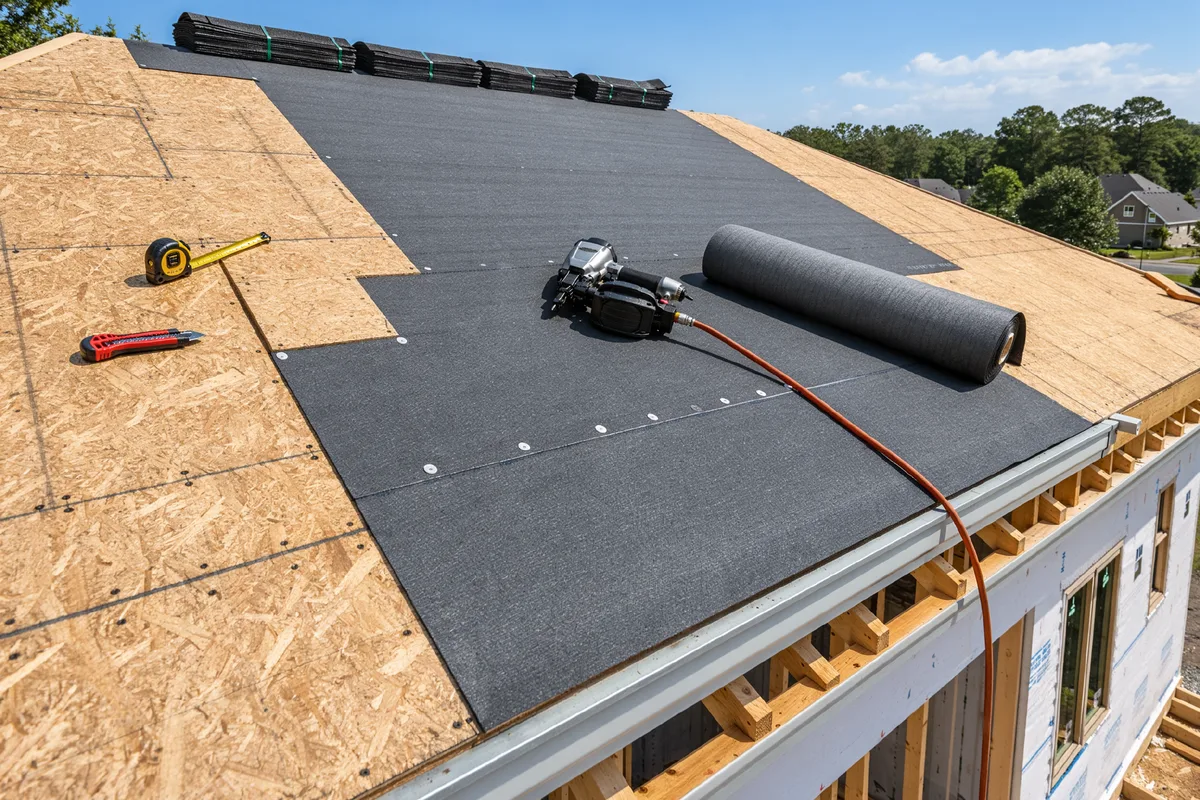
Where an addition meets the old roof
The joint between a new section and the existing house is where leaks start. Expect step flashing along walls, careful matching of ridge heights and shingle courses, and sealed transitions. Ask how the roofer will weave the new work into whatever material already covers the house.
Working around other trades
Plumbers need vent penetrations, electricians want mast locations and mechanical crews place exhaust vents. The roofer flashes each one, so have the locations settled before shingles go down. Cutting through finished roofing later invites leaks and callbacks. Early agreement on vent placement avoids rework.
With many 1960s homes in Shoreline, new ADUs and additions often must match older rooflines, so bring photos of the existing roof to your first conversation.
Allowances and change orders
Plans change during construction, and roofing changes with them: a new dormer, extra skylight or revised pitch. Ask how the roofer prices additions mid-job and whether quotes include a contingency, so a surprise does not become a dispute. Ask to see the change-order form before you sign.
Comparing builder and owner bids
A builder's roofing line item may include markup or exclude details you expected. Ask for the roofer's scope, material specs and warranty terms directly, then compare. Owners who hire separately gain control but also take on coordination. Compare line by line, since the lowest bid may omit flashing or cleanup.
Protecting the interior while open
Until the roof is dried in, rain can soak insulation, drywall and subfloors. Cover stored materials, watch the forecast and photograph any moisture. Tell the roofer promptly if water gets in so the cause can be traced to a detail, not guessed at. Quick action limits damage.
Useful local facts for Shoreline
Building permits for Shoreline homes are handled by the City of Shoreline permit office. Small repairs often need nothing, while a tear-off, new sheathing or structural work usually does, so ask the roofer who pulls the permit.
Before work begins, look the company up on L&I's Verify a Contractor page. Washington requires construction contractors, roofers included, to be registered.
Fall and winter windstorms are the main source of sudden roof damage around Puget Sound. Lifted tabs and loose ridge caps are worth a look after a blow.
Storm took out power too? Report it to Seattle City Light at 206-684-3000, and stay clear of any downed line.
Much of the housing in Shoreline dates to the 1960s or earlier, so a tear-off can uncover older layers or board decking that need extra work.
Calls from Shoreline are often matched with roofers who also cover Mountlake Terrace, Kenmore and Edmonds.
Shoreline at a glance
Calls come in from across Shoreline, including around Richmond Beach, Aurora Avenue N, Interstate 5.
Shoreline's housing is older on average than most Eastside cities, so many roofs cover mid-century homes.
New Roof Installation questions in Shoreline
Do I need a permit for a new roof on an addition or ADU?
Can roofing start before the house is fully framed?
Does new construction come with a roof warranty?
What do I need to bring to my first conversation with a roofer?
More roofing services in Shoreline
New Roof Installation nearby
Helpful guides
Sources
Last updated: