TPO is a single-ply membrane made from thermoplastic polyolefin, usually white, with seams that a roofer welds together with hot air. It is rolled across the roof in wide sheets. Call the number on this page to be connected with a local roofing contractor in Seabeck.
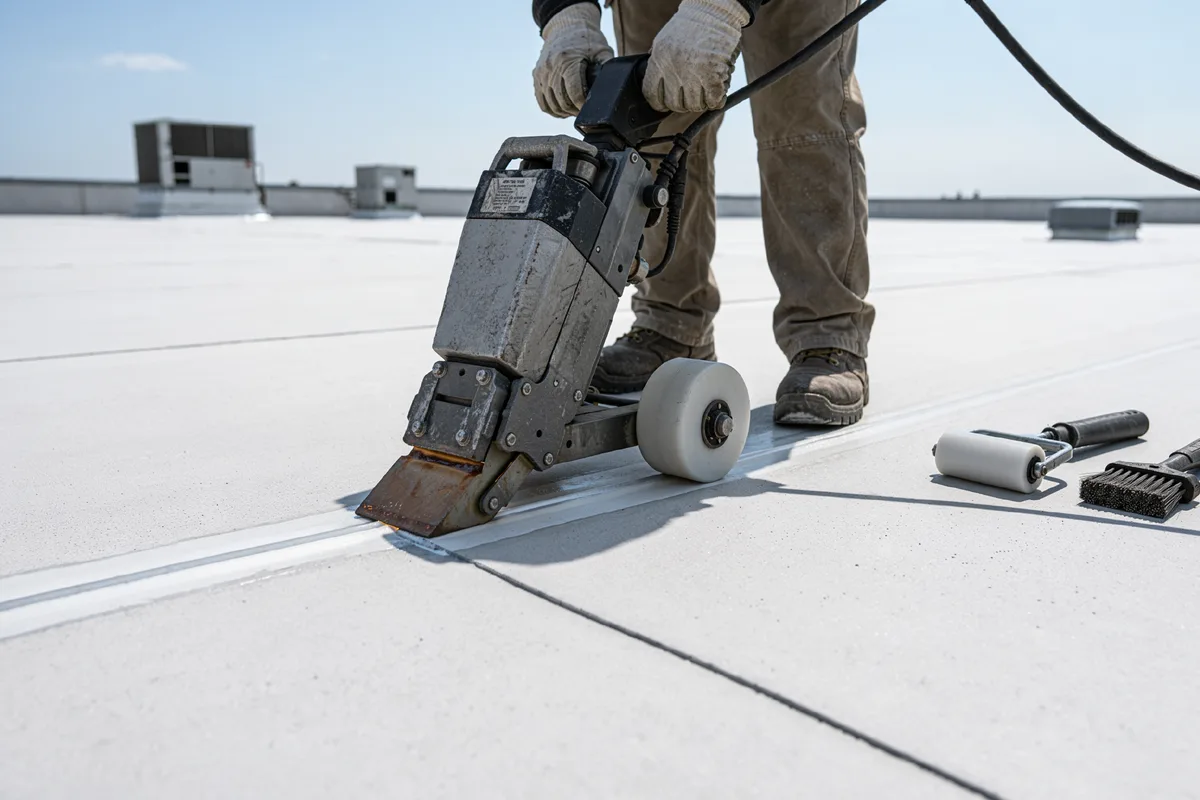
Types of TPO in the field
Membranes come in different thicknesses, reinforced with fabric or polyester scrim. Thicker sheets resist punctures and foot traffic better. A roofer can explain which version suits a roof that sees heavy use or lots of falling debris. Ask which thickness the roofer recommends and why it suits your building.
Flashings and corners need extra care
Walls, pipes, curbs and corners require cut pieces and hand welding. These spots take the most thermal movement and the most attention. If a leak is near a penetration or corner, the roofer will start there. Ask the roofer whether corners and penetrations are welded by hand or pre-formed.
Wind off the water pulls hard at the edges of a single-ply roof, so shoreline buildings often need extra fasteners and strong edge metal.
Needles, leaves and limbs from tall trees pile onto flat roofs here, so a white TPO surface shows debris and needs drain checks.
Access and logistics
Roofers may need a crane, hoist or staged materials for a tall or tight site. Closed streets, tenant parking and narrow alleys all add effort. Mention access issues early so the estimate is realistic. Photos of the roof and access route help the roofer estimate before the visit.
Moss, algae and debris on a white roof
Shaded sections can grow algae and collect needles and leaves. Gentle cleaning and drain care keep the membrane in good shape. Harsh pressure or scrapers can scar the surface, so ask the roofer how to clean it. Pressure washers can damage welds and flashings, so avoid them.
What to ask a TPO roofer
- How do you test your seam welds?
- What thickness and attachment do you recommend?
- How are walls, drains and edges detailed?
- Which manufacturer warranty applies?
Written answers make comparisons easier. Ask each roofer the same questions and compare answers side by side. Ask for a written scope afterward.
Local details for Seabeck
On permits, the Kitsap DCD says: roofing permit required for residential if it includes structural work or more than 2,100 square feet of roofing materials are being replaced; always required for commercial.
Washington L&I registers construction contractors. Its free lookup shows whether a roofer's registration is active and whether there are claims against it.
Homes near the water around Seabeck take more wind and salt exposure, which wears metal flashing and fasteners faster.
Months of steady rain, shaded roofs and mild temperatures make moss and debris a constant here. Gentle removal is better for shingles than a pressure washer.
Tall evergreens around Seabeck drop needles that fill valleys and gutters and keep roofs shaded and damp, which is where moss starts.
Contractors that take calls here usually also work in Silverdale, Bremerton and Quilcene.
TPO Roofing questions in Seabeck
What does TPO stand for?
How are TPO seams sealed?
Why is TPO usually white?
How does a TPO roof handle foot traffic?
More roofing services in Seabeck
TPO Roofing nearby
Helpful guides
Sources
Last updated: