Fascia and soffit can be wood, aluminum, vinyl or fiber cement, and each has its own strengths in a wet climate. Cost depends on the length of roofline, the height of the house and how much hidden rot lies behind. A roofer can advise on what suits the house. Call the number on this page to be connected with a local roofing contractor in Seabeck.
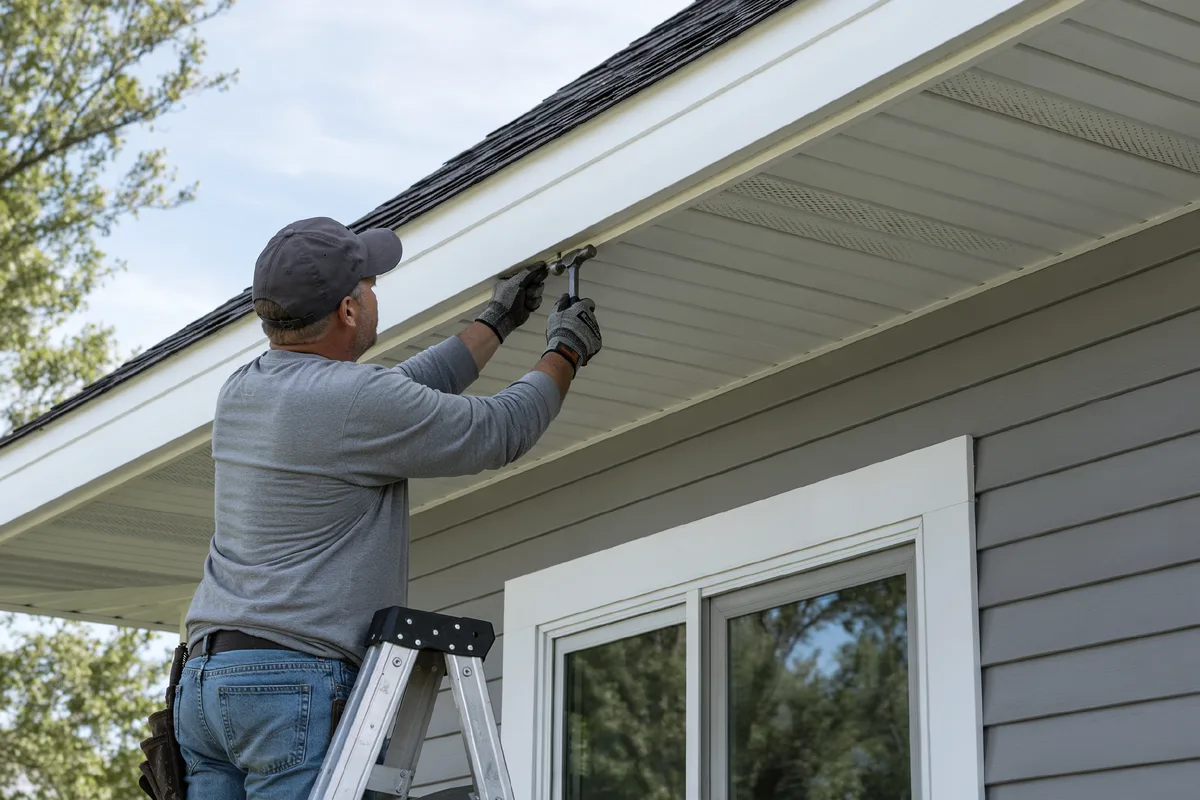
Stains below the overhang
Brown water marks on the soffit, mildew on the underside of the eaves, or peeling paint around vents mean moisture is lingering there. Look up from the ground after rain and notice whether wetness is patchy or runs along the entire edge. Compare it with last season.
Critters look for soft spots
Raccoons, squirrels, rats and birds go for rotted corners and loose panels because they are easy to open. Once one animal gets in, others follow the same path. Damage from them usually adds to the rot already present. Repairs without sealing the entry point rarely last through winter.
Tall firs and cedars shed needles into gutters and shade the eaves, keeping fascia damp and giving squirrels and raccoons easy access along branches.
Wind-driven rain and salt air off the water speed the wear on trim paint, fasteners and metal gutters along exposed rooflines.
Material choices and their trade-offs
- Primed wood: traditional look, needs paint upkeep
- Aluminum or vinyl: low maintenance, limited profiles
- Fiber cement: durable, heavier, harder to cut
- PVC trim: moisture resistant, easy to paint
Each differs in cost and upkeep, so ask for samples, finish details and the expected lifespan of each material before choosing.
Dealing with animals first
If wildlife is in the eaves, a roofer may advise removal before repair so no animal is sealed in. Wildlife specialists handle humane removal, while the roofer rebuilds the entry. Ask how both steps will be scheduled and who takes the lead. Ask what the plan will be.
Keep water away from the walls
If a gutter has come loose and water is running down the wall, direct downspouts away from the foundation with temporary extensions where it is safe. Move anything stored under the eaves, and watch for dampness inside the walls nearby. Keep notes on timing.
Permits, weather and roofs in Seabeck
Permit note from the Kitsap DCD: Roofing permit required for residential if it includes structural work or more than 2,100 square feet of roofing materials are being replaced; always required for commercial.
Before work begins, look the company up on L&I's Verify a Contractor page. Washington requires construction contractors, roofers included, to be registered.
Homes near the water around Seabeck take more wind and salt exposure, which wears metal flashing and fasteners faster.
Most roof trouble in this part of Washington shows up in the wet season, when a small gap in flashing or a lifted shingle has months of rain to work on.
Tall evergreens around Seabeck drop needles that fill valleys and gutters and keep roofs shaded and damp, which is where moss starts.
Contractors that take calls here usually also work in Silverdale, Bremerton and Quilcene.
Fascia & Soffit Repair questions in Seabeck
What is the difference between fascia and soffit?
Why is my fascia board rotting?
What material is best for fascia in a wet climate?
Should I fix animal damage or remove the animal first?
More roofing services in Seabeck
Fascia & Soffit Repair nearby
Helpful guides
Sources
Last updated: