Roofers who handle wood shakes will look at the shakes, the underlayment, the flashing and the spacing boards before suggesting anything. Many shake roofs here fail from the underside up, which a quick look from the ground can miss. Call the number on this page to be connected with a local roofing contractor in Seabeck.
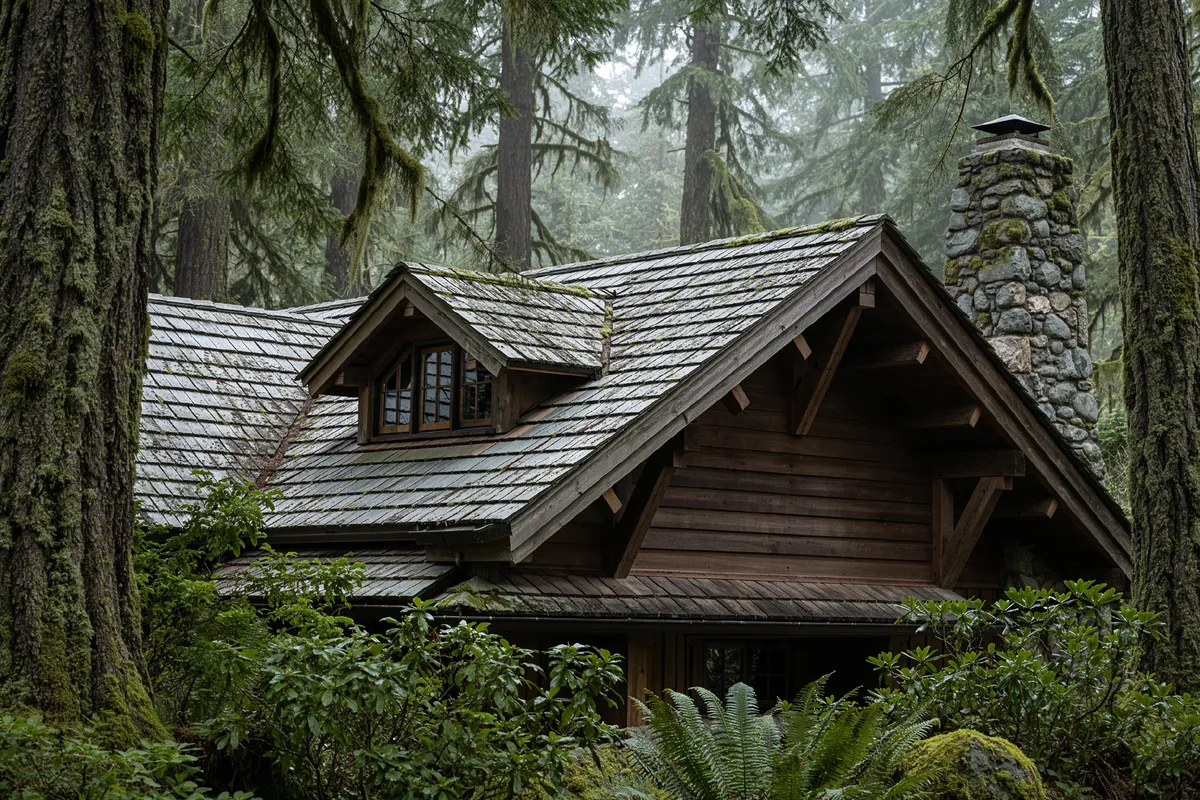
Moss, rot and what they mean
Thick moss is not just cosmetic on a wood roof. It holds water against shakes and can hide rot underneath. If the moss mat lifts away with bare, dark or crumbly wood beneath it, the shakes under that patch may already be past saving.
The trouble with trees and shade
Firs and cedars drop needles that lodge between shakes and hold moisture. Overhanging limbs keep the roof in shade and scrape the surface in wind. Roofs under heavy canopy often show moss, rot and splitting years before sunnier roofs on the same street. Those drainage problems add up quickly.
Shade from large evergreens keeps cedar shakes wet long after the rain stops here, so moss and soft spots often show up sooner on tree-covered lots.
Exposure on the shoreline adds wind loading and salty moisture to a cedar roof, so fasteners and metal details deserve extra scrutiny.
Why shake jobs are priced differently
Cedar is labor-heavy. Each piece is split, fitted and nailed by hand, and matching existing weathered shakes takes care. Material grade, thickness and treatment all change the total, so it helps to describe the roof as accurately as you can on the call. Photos help the conversation.
Converting from cedar to another material
Homeowners often switch to architectural asphalt, standing-seam metal or composite shake-style roofing. The old shakes and sometimes the spaced boards come off, solid decking goes on if needed, and underlayment and flashing are replaced. Ask how the roofer handles the transition at eaves and ridges.
After a windstorm
Walk the yard and gutters looking for broken shake pieces, then check ceilings and the attic. Do not climb up to look. If a limb is resting on the roof or a line is down nearby, keep clear and call emergency services before anyone else. Photograph everything that has fallen.
Permits, weather and roofs in Seabeck
On permits, the Kitsap DCD says: roofing permit required for residential if it includes structural work or more than 2,100 square feet of roofing materials are being replaced; always required for commercial.
Washington requires roofing contractors to register with the Department of Labor & Industries. L&I's Verify a Contractor tool shows a company's registration status before you sign anything.
Homes near the water around Seabeck take more wind and salt exposure, which wears metal flashing and fasteners faster.
Fall and winter windstorms are the main source of sudden roof damage around Puget Sound. Lifted tabs and loose ridge caps are worth a look after a blow.
Tall evergreens around Seabeck drop needles that fill valleys and gutters and keep roofs shaded and damp, which is where moss starts.
Calls from Seabeck are often matched with roofers who also cover Silverdale, Bremerton and Quilcene.
Cedar Shake Roofing questions in Seabeck
Is a cedar roof a fire risk?
Will new shakes match my old roof?
Do I need a permit to reroof a shake roof?
Can wet cedar be dangerous to walk on?
More roofing services in Seabeck
Cedar Shake Roofing nearby
Helpful guides
Sources
Last updated: