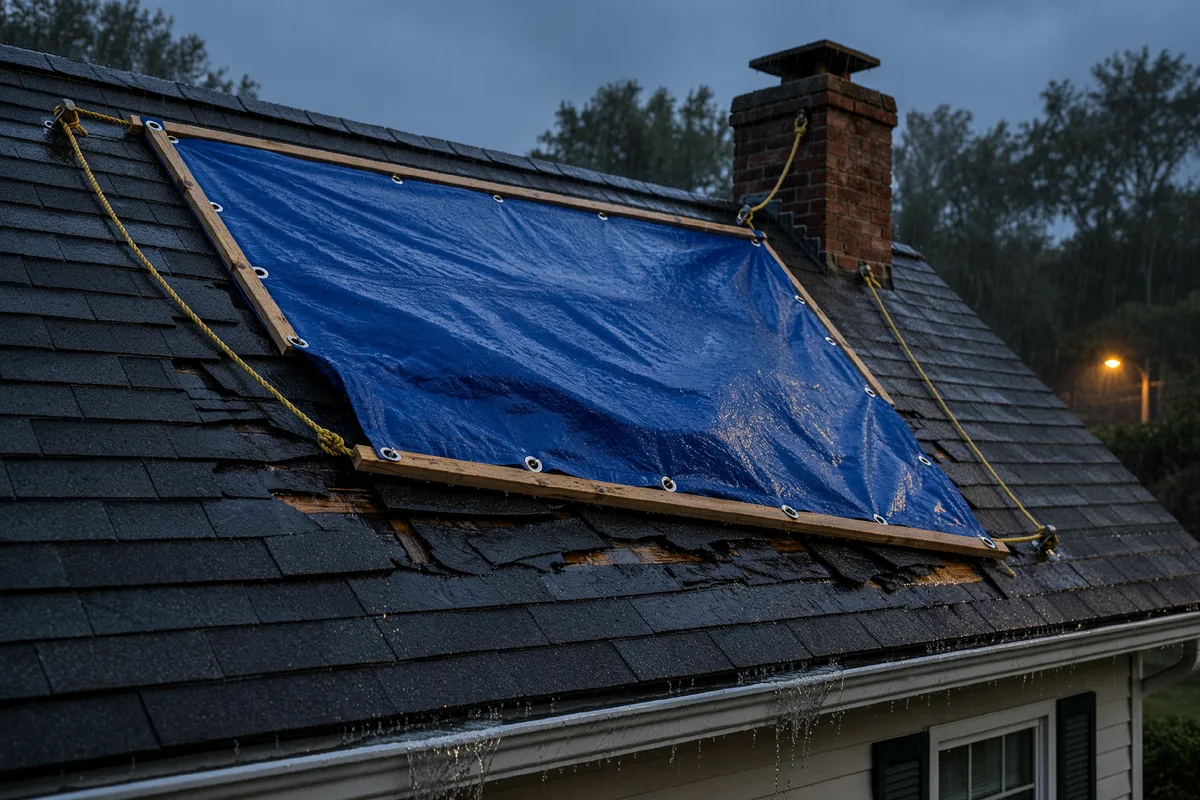
Tarping is the standard stopgap for an opened roof. It is only as good as how it is secured, so it should be fastened to solid framing and checked after more wind. Call the number on this page to be connected with a local roofing contractor in Tacoma.
What a roofer treats as an emergency
Roofers tend to prioritize an open roof surface, a punctured deck, water near wiring, and leaks over living areas. A single cracked shingle over a dry attic rarely qualifies. Being specific about where the water shows up helps them sort your call fast.
Temporary fixes roofers reach for
- Tarps secured with strapping or battens
- Peel-and-stick sheeting over small openings
- Plywood over a punctured section
- Sealant at exposed fasteners
Which one fits depends on slope, size and how wet the surface is, so the roofer chooses on site. The roofer makes that call on site.
Temporary versus permanent pricing
Emergency cover and the lasting repair are often quoted separately. The first is labor and basic materials; the second depends on what failed. Ask whether the temporary work will be credited toward the full repair or kept as its own charge. Ask for a plain list of what each part covers.
Useful local facts for Tacoma
Building permits for Tacoma homes are handled by the City of Tacoma permit office. Small repairs often need nothing, while a tear-off, new sheathing or structural work usually does, so ask the roofer who pulls the permit.
Washington requires roofing contractors to register with the Department of Labor & Industries. L&I's Verify a Contractor tool shows a company's registration status before you sign anything.
Fall and winter windstorms are the main source of sudden roof damage around Puget Sound. Lifted tabs and loose ridge caps are worth a look after a blow.
Storm took out power too? Report it to Tacoma Power at 253-502-8602, and stay clear of any downed line.
Before you call, note how many stories the house is and snap photos of the problem spots from the ground. It helps the roofer plan ladders and materials.
Nearby, the same kind of help is available in University Place, Fife and Lakewood.
Make a short list for the call
Note where water enters, when it started, what the roof is made of, whether shingles are missing, and whether any limb or debris hit it. A clear description lets the roofer plan materials and decide how fast to move. Jot it down before dialing.
Insurance next steps
If weather or debris caused the damage, report it promptly and share your photos and the roofer's written description. Keep receipts for temporary protection. Do not sign a full repair contract until you understand what the carrier will cover. Keep the roofer's written notes with the invoice and photos.
More about Tacoma
Calls come in from across Tacoma, including around Downtown Tacoma, Hilltop, Stadium District.
Tacoma's wettest months run from November through January, with dry summers that make the best reroofing season.
Emergency Roof Repair questions in Tacoma
Does an emergency repair fix the roof permanently?
What should I photograph?
Can I use roofing cement or sealant myself?
What happens if the tarp comes loose?
More roofing services in Tacoma
Emergency Roof Repair nearby
Helpful guides
Sources
Last updated: