Torch-down has long been used on low-slope roofs in wet climates, particularly on additions, porches and small commercial buildings. The seams are the part to watch. Call the number on this page to be connected with a local roofing contractor in Snohomish.
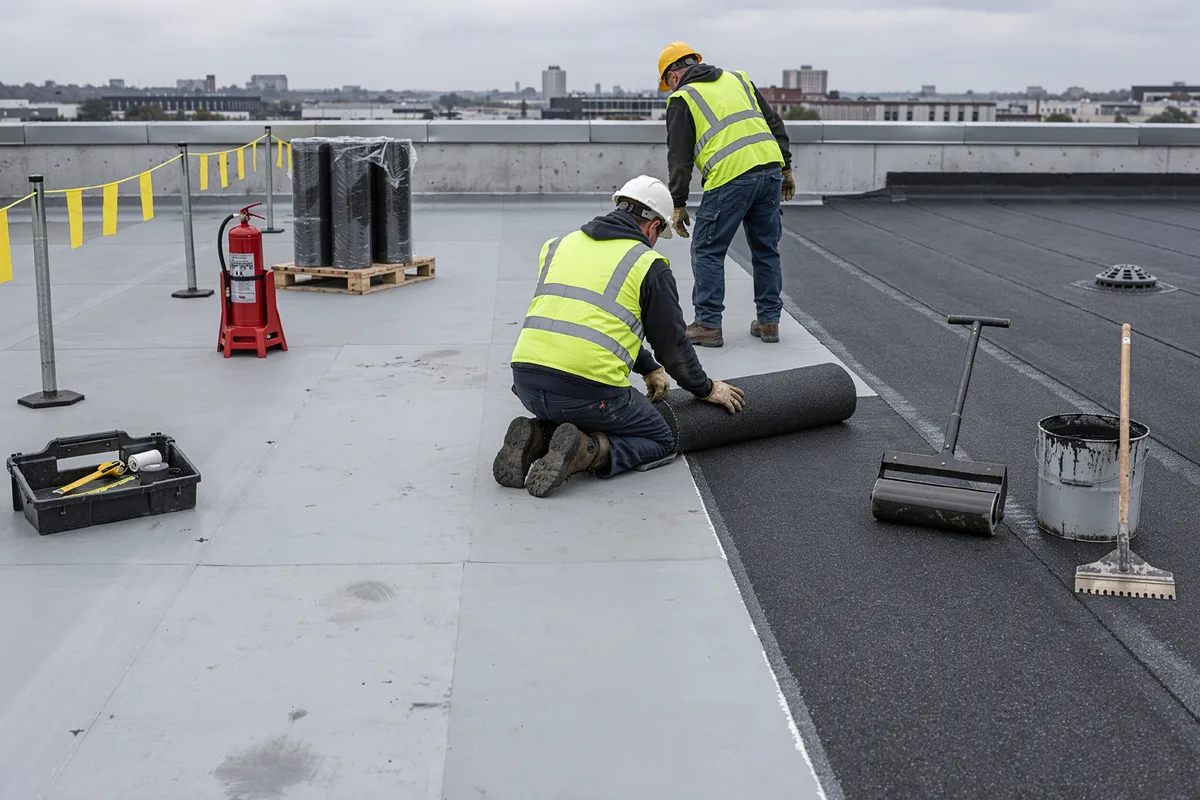
Why wet-climate roofers still use it
Modified bitumen is tough, handles foot traffic and repairs well. Its overlapped, fused seams cope with long wet seasons better than many thin coverings. That record is why torch-down remains common on low slopes across the region. Ask the roofer how it compares with other options for your building.
Fire-safety steps roofers take
- Fire extinguishers kept on the roof
- Clearing leaves and debris from the work area
- Shielding vents, walls and gaps near the flame
- Checking that gas hoses and cylinders are secure
Careful roofers treat these as routine. Never try work near a gas line or a vent.
Overhanging branches near a low roof can scrape granules and puncture the cap sheet, so roofers often suggest trimming as part of the job.
Mechanical damage on a busy roof
Foot traffic, tree limbs, rooftop equipment and dropped tools can scuff or puncture the cap sheet. Damage to the granule layer may look cosmetic but exposes asphalt. A roofer can patch punctures and mark vulnerable walkways. A patched area can be marked as a no-walk zone afterward.
What shapes the cost
Size, number of layers, deck condition, flashing complexity and roof access all affect price. A simple rectangle costs less than a roof broken by chimneys, vents and walls. Each independent roofer sets his own price after seeing the roof. Ask each roofer to explain what is included in the bid.
Keeping the roof in good shape afterward
Clear debris from drains and scuppers, keep limbs trimmed back and avoid walking on the surface. A roofer can recommend periodic checks, especially after strong storms, so small laps are resealed before they leak. Small habits make a long-term difference, and a roofer can suggest a check schedule.
Permits, weather and roofs in Snohomish
Permit note from the City of Snohomish permit office: The city FAQ states a building permit is required for any new construction, remodel, repair, demolition, change in use or conversion; it does not specifically address re-roofing, so confirm with the Permit Center.
Washington L&I registers construction contractors. Its free lookup shows whether a roofer's registration is active and whether there are claims against it.
Fall and winter windstorms are the main source of sudden roof damage around Puget Sound. Lifted tabs and loose ridge caps are worth a look after a blow.
Tall evergreens around Snohomish drop needles that fill valleys and gutters and keep roofs shaded and damp, which is where moss starts.
Electric service here comes from Snohomish PUD (outages: 425-783-1001). Keep away from any line touching the house or a fallen tree.
Calls from Snohomish are often matched with roofers who also cover Everett, Monroe and Lake Stevens.
Torch-Down Roofing questions in Snohomish
What is torch-down roofing?
Can I install or repair torch-down roofing myself?
Why do roofers sometimes avoid open-flame work?
What should I do if I smell smoke during roofing work?
More roofing services in Snohomish
Torch-Down Roofing nearby
Helpful guides
Sources
Last updated: