In a wet climate the shingle matters less than what is under it: drip edge, quality underlayment, sealed valleys and proper ventilation. A roofer can explain which layers your roof needs. Call the number on this page to be connected with a local roofing contractor in Olalla.
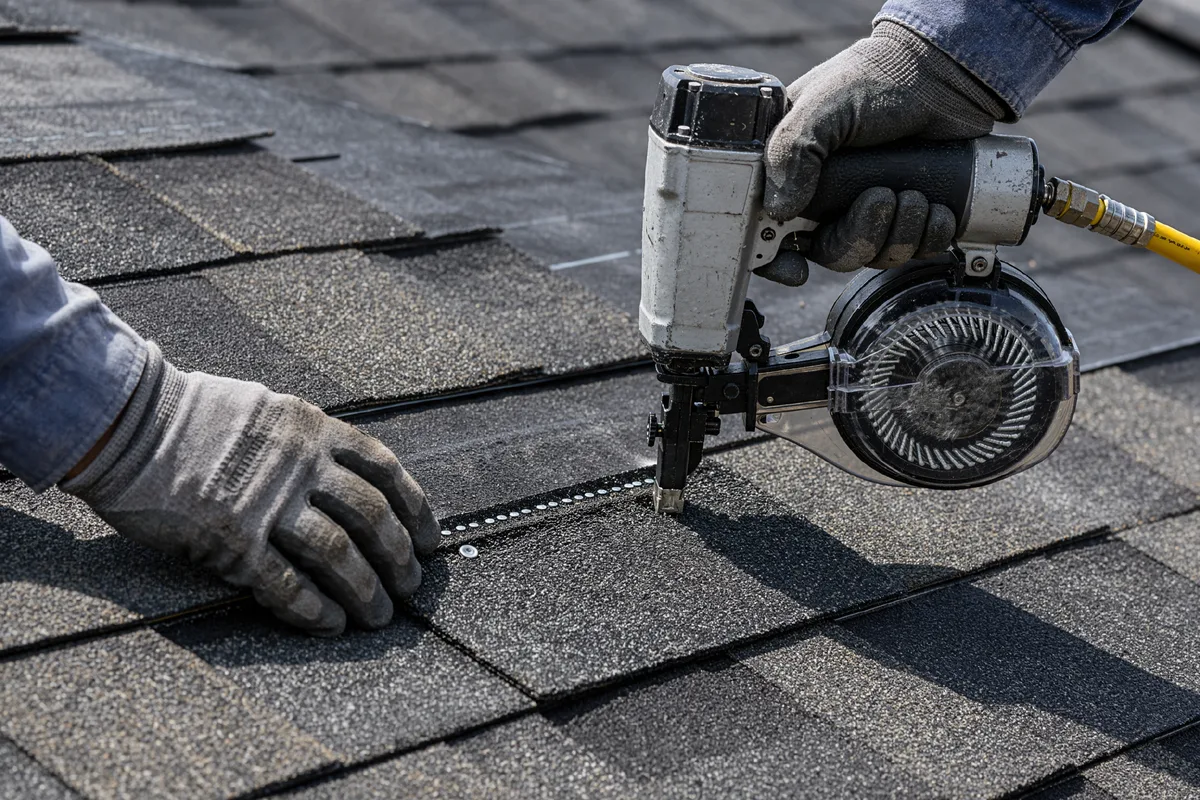
Color, weight and thickness samples
Hold full-size samples against the siding outdoors and look in morning and afternoon light. Pay attention to thickness at the edge, granule texture and how much blend variation shows. Large roof surfaces look darker than a small chip suggests. Bring a small piece of siding to the showroom.
Ice and water protection
Self-adhering membrane seals around nails and blocks wind-driven water. Roofers use it in valleys, along eaves, around chimneys and skylights and on low slopes. A wet, windy climate makes these weak points the first places water finds. Ask where the roofer plans to place it and how far it extends up the slope.
On heavily wooded lots, moss grows fast on shingle edges, so mention the trees and the shade when comparing products, ventilation and treatments.
Salt air corrodes standard fasteners and metal trim over time, so make sure every asphalt shingle quote specifies coastal-appropriate hardware and flashing.
Algae-resistant granules
Black streaks on Northwest roofs are usually algae, not dirt. Shingles made with copper-bearing granules resist this staining. They are a smart choice for shady lots, though they will not prevent moss from taking hold, so keep branches trimmed and gutters clear. Ask for algae-resistant lines when shade covers much of the roof.
Permits, weather and roofs in Olalla
On permits, the Kitsap DCD says: roofing permit required for residential if it includes structural work or more than 2,100 square feet of roofing materials are being replaced; always required for commercial.
Washington requires roofing contractors to register with the Department of Labor & Industries. L&I's Verify a Contractor tool shows a company's registration status before you sign anything.
Homes near the water around Olalla take more wind and salt exposure, which wears metal flashing and fasteners faster.
Fall and winter windstorms are the main source of sudden roof damage around Puget Sound. Lifted tabs and loose ridge caps are worth a look after a blow.
Tall evergreens around Olalla drop needles that fill valleys and gutters and keep roofs shaded and damp, which is where moss starts.
Storm took out power too? Report it to PSE at 888-225-5773, and stay clear of any downed line.
Calls from Olalla are often matched with roofers who also cover Burien, Vashon and Gig Harbor.
Local weather and product selection
Persistent rain, shade and moss favor shingles with strong granule bonding and algae resistance. Exposed sites with strong gusts favor higher wind ratings. Tell the roofer where the house sits, and the recommendation will reflect real conditions, not a generic brochure. Say whether the roof is exposed or sheltered.
Sun, heat and ventilation
An under-ventilated attic bakes shingles from below and traps moisture that breaks down the mat. Even good products age faster on hot, stagnant decks. A roofer who checks airflow is protecting the shingles you bought as much as the attic. Cooler attics help new and old shingles last.
Asphalt Shingle Roofing questions in Olalla
Do I need ridge vents?
What color shingle hides moss and dirt best?
Do asphalt shingles work on shaded, mossy lots?
What shingle works near salt water?
More roofing services in Olalla
Asphalt Shingle Roofing nearby
Helpful guides
Sources
Last updated: