Torch-down has long been used on low-slope roofs in wet climates, particularly on additions, porches and small commercial buildings. The seams are the part to watch. Call the number on this page to be connected with a local roofing contractor in Milton.
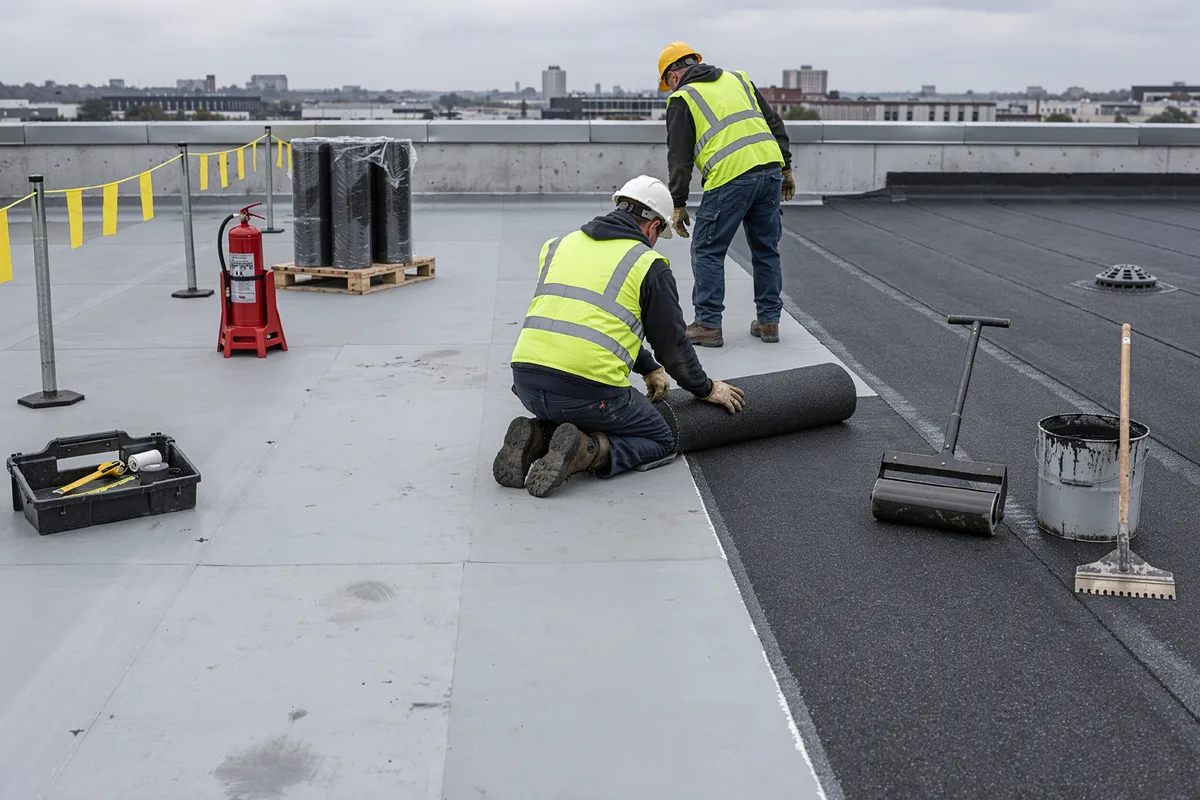
Why wet-climate roofers still use it
Modified bitumen is tough, handles foot traffic and repairs well. Its overlapped, fused seams cope with long wet seasons better than many thin coverings. That record is why torch-down remains common on low slopes across the region. Ask the roofer how it compares with other options for your building.
Watching after the torch goes out
Heated asphalt and wood can hold heat long after the flame is off. Roofers commonly stay on site and check seams, edges and the spaces below for warmth or smoke before they leave. That patience is part of safe torch work. Many crews also keep water on hand.
Blisters, ridges and splits
- Blisters point to trapped moisture or air
- Ridges often follow joints in the deck
- Splits suggest movement or old age
- Bare spots show where granules have worn off
Each one calls for a slightly different fix. A roofer will match the repair to the kind of failure.
Local details for Milton
If the job grows from a patch into a full reroof or framing repair, check with the City of Milton permit office before work starts.
Before work begins, look the company up on L&I's Verify a Contractor page. Washington requires construction contractors, roofers included, to be registered.
Most roof trouble in this part of Washington shows up in the wet season, when a small gap in flashing or a lifted shingle has months of rain to work on.
Storm took out power too? Report it to PSE at 888-225-5773, and stay clear of any downed line.
Find the age of the roof if you can (closing papers or old receipts help) and note where any water shows up inside.
Nearby, the same kind of help is available in Federal Way, Fife and Pacific.
Scheduling around rain
Torch-applied membranes need a dry surface and calm conditions. Rainy weeks can push a start date back, and the schedule may shift after work begins. Ask how the roofer handles weather delays and temporary protection. Plan around possible delays, and ask what protects the roof between visits.
Keeping the roof in good shape afterward
Clear debris from drains and scuppers, keep limbs trimmed back and avoid walking on the surface. A roofer can recommend periodic checks, especially after strong storms, so small laps are resealed before they leak. Small habits make a long-term difference, and a roofer can suggest a check schedule.
Torch-Down Roofing questions in Milton
Is torch-down roofing safe?
How long does a torch-down roof last?
Why do roofers sometimes avoid open-flame work?
Can torch-down be installed in rain?
More roofing services in Milton
Torch-Down Roofing nearby
Helpful guides
Sources
Last updated: