Do what you can from inside, such as catching drips and moving belongings, and leave roof access to the roofer. A wet, steep roof is dangerous to walk. Call the number on this page to be connected with a local roofing contractor in Des Moines.
Clues from the attic
With a flashlight from a safe floor spot, look for dark, wet sheathing, dripping nails, damp insulation or a trail of water along a rafter. These show where the opening is. Do not step between joists. Describe what you see, and the roofer can plan the right materials.
How long temporary cover lasts
Sheeting is meant to hold for days or weeks, not through a whole wet season. Sun and wind wear it down, and trapped water can pool in dips. Ask the roofer how long they expect it to hold and when the permanent work should happen.
Homes in this area built in the 1970s may have original flashing or plank decking, so the roofer may find more damage than first appears after the cover is on.
Exposed waterfront roofs face wind off the water, which can loosen cover quickly, so ask the roofer how the sheeting will be anchored.
Temporary versus permanent pricing
Emergency cover and the lasting repair are often quoted separately. The first is labor and basic materials; the second depends on what failed. Ask whether the temporary work will be credited toward the full repair or kept as its own charge. Ask for a plain list of what each part covers.
Know this about Des Moines roofs
For permit questions on a reroof, start with the City of Des Moines permit office. A contractor who works here regularly will know whether your job needs anything filed.
Before work begins, look the company up on L&I's Verify a Contractor page. Washington requires construction contractors, roofers included, to be registered.
Homes near the water around Des Moines take more wind and salt exposure, which wears metal flashing and fasteners faster.
Fall and winter windstorms are the main source of sudden roof damage around Puget Sound. Lifted tabs and loose ridge caps are worth a look after a blow.
Electric service here comes from PSE (outages: 888-225-5773). Keep away from any line touching the house or a fallen tree.
Much of the housing in Des Moines dates to the 1970s or earlier, so a tear-off can uncover older layers or board decking that need extra work.
Nearby, the same kind of help is available in SeaTac, Kent and Federal Way.
Photograph before cleanup
Take wide and close photos of ceilings, walls, attic wood and anything damaged, plus the roof from the ground. Note the time and weather. These records help any insurance claim and show the roofer where water entered, even if the drip has since slowed. Keep a list of damaged items.
After the tarp goes on
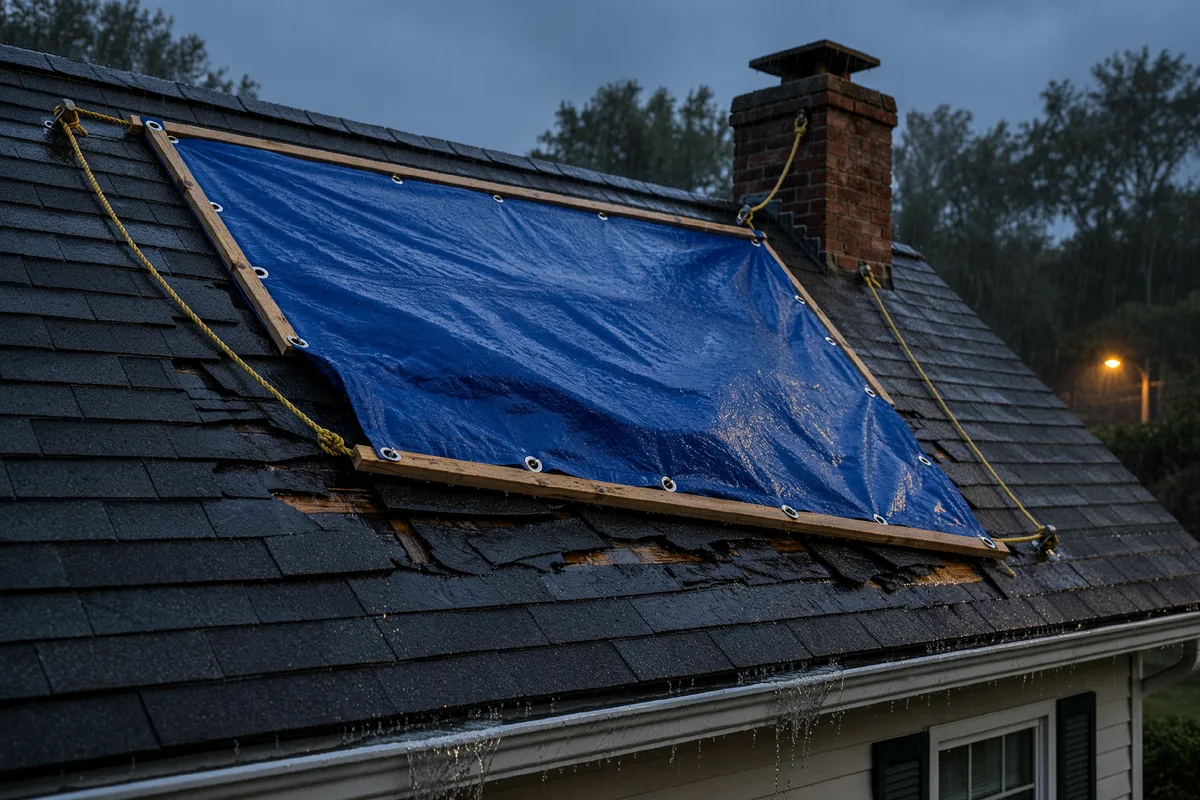
Temporary cover starts the clock on the real repair. Ask when the roofer can return, what materials are needed, and whether dry weather is required. Keep an eye on the cover during wind, and call back if a corner loosens or water shows up again.
Emergency Roof Repair questions in Des Moines
Should I go up and tarp the roof myself?
What if water is dripping through a light fixture?
Can I use roofing cement or sealant myself?
What happens if the tarp comes loose?
More roofing services in Des Moines
Emergency Roof Repair nearby
Helpful guides
Sources
Last updated: